Organizing small kitchens can seem like a puzzle when every appliance requires its own space.
Ad
But, with a few adjustments, you can gain space, improve circulation, and make everything easier to use.
The position of the appliances, cabinet organization, and even the countertop can make a difference.
Ad
So, discover how to make your kitchen more practical without needing a miracle with your square footage.
Start with the Layout: Where Should each Appliance Go?
Before putting everything away just any way, look at the kitchen as a whole.
Where are the refrigerator, stove, sink, and main appliances? Their arrangement directly influences your routine.
In small kitchens, each appliance needs to occupy a strategic place.
Leaving the coffee maker far from the outlet or the blender at the back of the cabinet can complicate a simple task.
A good idea is to keep the appliances used daily more accessible.
Those used only occasionally can stay in upper cabinets or less valuable spaces.
It is also worth observing the opening of doors and drawers.
After all, there’s no point finding the perfect spot for the air fryer if it blocks the cabinet next to it.
How Much Space do You Need to Move around Comfortably?
It is not enough to make all the appliances fit. You also need to be able to move around the kitchen.
In small kitchens, tight passageways can interfere with circulation.
Before positioning an appliance, check if there’s enough space to open doors, pull drawers, and move around.
Also consider the path between the refrigerator, sink, and stove, which are often used when preparing meals.
A functional kitchen does not need to be huge. It needs good distribution and few obstacles.
| What to observe | Why it matters |
|---|---|
| Door opening | Prevents blockages |
| Circulation | Makes movement easier |
| Distance between appliances | Improves everyday use |
| Outlets | Prevents cords from crossing the countertop |
| Prep area | Helps during meals |
Smart Organization to Make the Most of Every Corner
Now let’s look at those spaces that normally go unnoticed.
Shelves, niches, and tall cabinets help make better use of small kitchens.
Dividers and vertical spaces make it easier to organize appliances and utensils.
Another idea is to take advantage of areas near the cabinets to store smaller objects.
But be careful: using every available centimeter does not mean filling everything up to the ceiling.
The goal is to create functional spaces, keeping what you actually use nearby and avoiding clutter.
Sometimes, the best organizer is simply realizing that that appliance is hardly ever used.
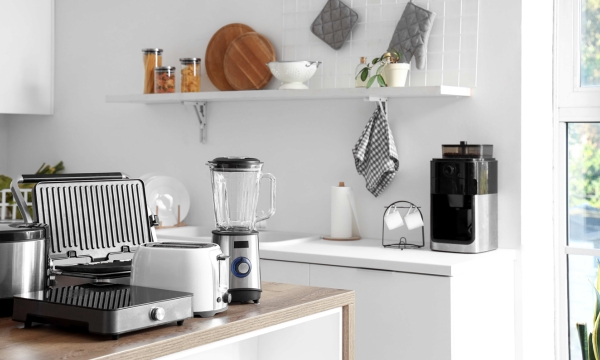
Built-In or Portable: Which Option Takes Up Less Space?
This choice depends heavily on your routine and the kitchen’s structure.
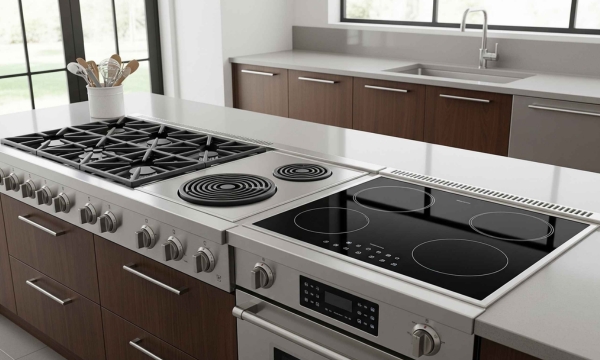
Built-in appliances keep the space organized and make better use of the furniture space.
On the other hand, portable models offer more flexibility, as you can remove and store them when needed.
See the difference:
| Option | Main advantage |
|---|---|
| Built-in | Integration with furniture |
| Portable | Easy to store |
| Compact | Takes up less space |
| Multifunctional | Combines different functions |
For small kitchens, compact or multifunctional models can be especially interesting.
Before buying, check the measurements, opening, outlets, and ventilation.
A small appliance also needs to breathe and function properly.
Ventilation: A Detail that Makes all the Difference
Here is a detail that can go unnoticed when organizing.
Some appliances need space around them for ventilation, especially appliances that generate heat.
Therefore, do not place the equipment against the wall or put appliances in tight spaces just because they fit.
Always check the manufacturer’s instructions regarding distance and ventilation.
In small kitchens, this is even more important because the desire to make use of every corner can speak louder.
Also keep the air vents clear to avoid problems during use.
But safety comes first.
Better to lose a few centimeters than turn the kitchen into an improvised sauna.
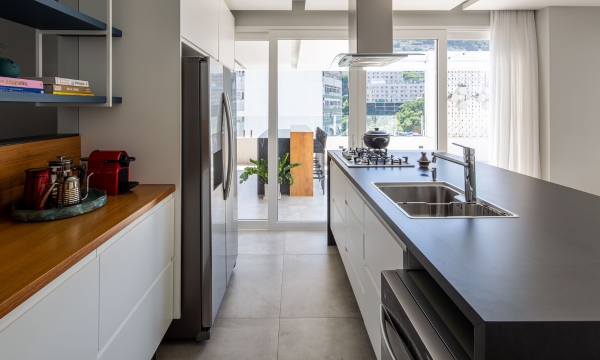
Clear Countertop: How to Prevent Appliances from Taking Over
The countertop is one of the most disputed areas of the kitchen.
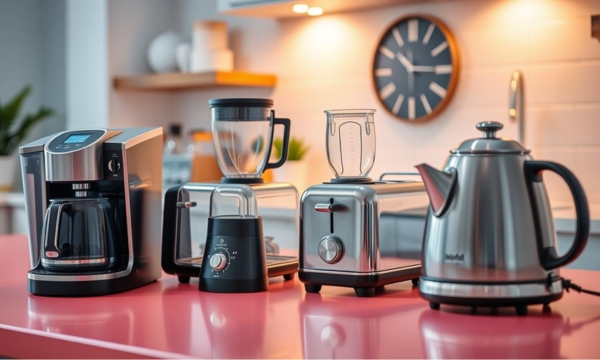
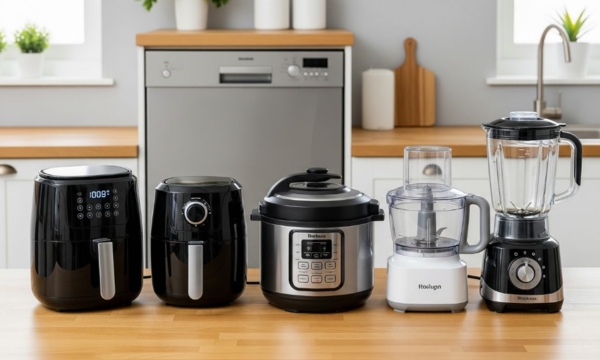
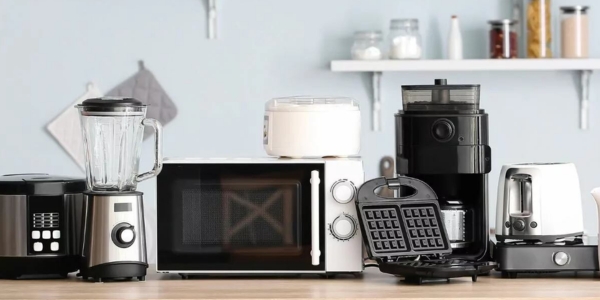
When the coffee maker, toaster, blender, and air fryer are left out, there is little countertop space left.
A simple solution is to leave only the frequently used appliances on the countertop.
The others can be stored in easily accessible places.
You can also create small usage zones.
The coffee maker can stay near the cups, while appliances used to prepare meals can stay close to the work area.
The result is a cleaner countertop and a much more practical routine.
If you need inspiration, Pinterest has different ideas for organizing small kitchens and making better use of the space.

Common Mistakes that Can Compromise Space
Sometimes, the problem is not the size of the kitchen, but some organizational choices.
One of the most common mistakes is leaving all appliances exposed, even those that are rarely used.
Another is buying appliances without measuring the available space.
Before bringing any model home, check:
- Width and depth: see if the appliance fits in the space.
- Opening space: keep doors and lids clear.
- Outlet location: keep the appliance near an outlet.
- Ventilation: check the necessary space around it.
- Ease of storage: choose a practical location.
- Frequency of use: keep the most frequently used ones nearby.
Also avoid blocking drawers, doors, or circulation areas.
In small kitchens, a few centimeters can completely change the user experience.
How to Make your Small Kitchen more Practical and Functional
After organizing the appliances, take a final look at the space.
Can you grab the appliances you use most without having to move five things first?
Is the countertop clear? Do the doors open normally? Is there enough space to prepare a meal without bumping into things?
If the answer is yes, you are already on the right path to organizing your small kitchens!
The secret of small kitchens is not putting more things in them, but making better use of the available space.
Prioritize truly useful appliances, take advantage of vertical areas, and keep each item close to where it will be used.
In the end, you do not need a giant kitchen. You just need to make every corner work in your favor.