Find out which platforms broadcast all matches of the FIFA World Cup 2026.
Ad
Matches will take place across three countries and multiple time zones.
Following the tournament will require more organization and planning.
Ad
Knowing where to watch makes the experience easier and more enjoyable.
👉 This article is for informational purposes only. Here you will find reliable apps with live game specifications.
Official Broadcast Channels and Platforms
Before thinking about app names, one simple idea helps: each region watches the World Cup in its own way.
There is no single universal app, and that’s normal for an event the size of the FIFA World Cup 2026.
In practice, fans end up reaching the official platforms according to the country they are in. To make it easier, it looks like this:
| Region | Official platforms |
|---|---|
| Europe | BBC iPlayer · ITVX · ARD Mediathek |
| United States | FOX Sports App · Peacock · FuboTV · YouTube TV |
| Asia | Disney+ Hotstar (selected markets) |
| Mexico | TUDN App · ViX |
| Africa | SuperSport App · beIN Connect |
| Canada | CTV App |
| Oceania | SBS On Demand |
| Middle East | beIN Connect |
| Global | FIFA+ |
These apps concentrate live broadcasts, commentary and features designed for those watching on a phone, tablet, or smart TV.
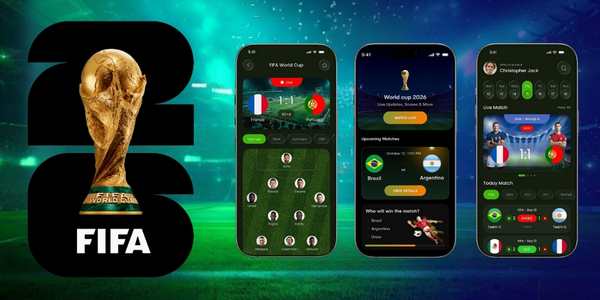
And for those watching on a phone, the key things are:
- Stable internet connection
- Official app for your region installed
- Notifications enabled for important matches
That already covers most of the experience!
What Changes with the 48 Team World Cup
The FIFA World Cup 2026 marks a clear shift in the tournament format. It’s not just a bigger World Cup, it’s a different one.
For the first time, 48 national teams will compete for the title.
This expands diversity, brings new playing styles, and puts more countries at the center of attention.
The tournament will feature 12 groups of 4 teams.
Each team plays three matches in the group stage, but with an important detail: there is almost no margin for error.
Advancing to the knockout stage are:
- the top two teams from each group
- the 8 best third-placed teams
This creates a knockout phase with 32 teams, something unprecedented in World Cups.
In practice, the rhythm changes:
- fewer matches played “just to fulfill the schedule”
- more games with real weight
- knockout rounds starting earlier
For fans, this means constant attention. Almost every day there’s an important match, and each round can completely reshape the tournament.

Group Stage Organization
The group stage of the FIFA World Cup 2026 organizes teams into groups that set the tournament’s pace from the very start.
- Group A: Mexico · South Korea · South Africa · Czechia
- Group B: Canada · Switzerland · Qatar · Bosnia and Herzegovina
- Group C: Brazil · Morocco · Haiti · Scotland
- Group D: United States · Australia · Paraguay · Turkiye
- Group E: Germany · Ecuador · Ivory Coast · Curaçao
- Group F: Netherlands · Japan · Tunisia · Sweden
- Group G: Belgium · Iran · Egypt · New Zealand
- Group H: Spain · Uruguay · Saudi Arabia · Cape Verde
- Group I: France · Senegal · Norway · Iraq
- Group J: Argentina · Austria · Algeria · Jordan
- Group K: Portugal · Colombia · Uzbekistan · Congo DR
- Group L: England · Croatia · Ghana · Panama
Host Cities and Match Venues
The FIFA World Cup 2026 will be held in three countries: the United States, Mexico, and Canada. In total, there are 16 host cities spread across an entire continent.
The opening match takes place at the historic Estadio Azteca in Mexico City, a venue filled with tradition and symbolic weight.
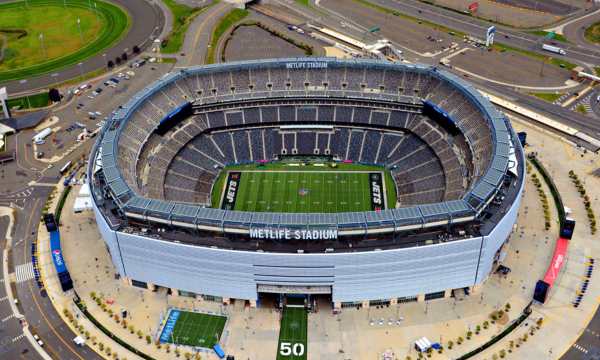
The grand final will be played at MetLife Stadium in New York/New Jersey, one of the largest stadiums in the world.
But decisive matches are not limited to these two venues. Other important stadiums come into play throughout the tournament:
- SoFi Stadium (Los Angeles) — cutting edge technology
- AT&T Stadium (Dallas) — massive structure
- Mercedes-Benz Stadium (Atlanta) — intense atmosphere
- Hard Rock Stadium (Miami) — third-place match venue
- Lumen Field (Seattle) — highly engaged crowd
- BC Place (Vancouver) and BMO Field (Toronto) — Canadian hosts
This variety creates different match atmospheres and enriches the experience for those watching closely or on their phones.
Official Online Ticket Sales
One of the central innovations of the FIFA World Cup 2026 is how fans access stadiums. Tickets will be exclusively digital. In practice, this means:
- Ticket linked to an individual FIFA ID
- Entry controlled via the official FIFA app
- Use of a dynamic QR code at the moment of entry
This digital model also brings clear advantages:
- Safer transfers between users
- Lower risk of fraud
- Direct communication with fans throughout the event
Top Contenders for the Title
Predictions are never certain, but some teams arrive at the FIFA World Cup 2026 with higher expectations.
Among the most talked about are France, England, and Spain, due to squad depth, consistency, and recent performance.
Brazil and Argentina remain natural forces, always among the favorites.
Other teams such as Portugal, Germany, and the Netherlands also appear as real contenders, depending on preparation and the draw.
With a more open format and decisive matches starting early, the trend points to a less predictable World Cup full of unexpected stories.
In the end, following the World Cup on your phone isn’t just about convenience. It’s about being present while everything happens.
Keep exploring other content on the site and experience every detail of the FIFA World Cup 2026, because some matches simply weren’t made to be watched later!